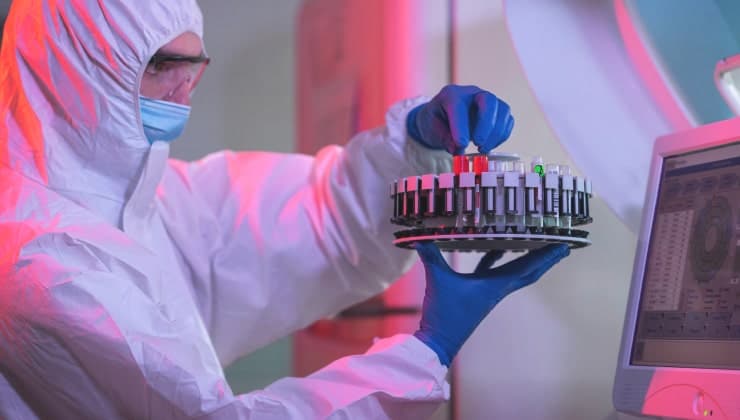
Precision, reliability, and reproducibility are essential in scientific research. Assay analysis allows laboratories to measure biological, chemical, and pharmaceutical samples accurately, providing trustworthy data for informed decisions. Assay Services have become central to research workflows, reducing errors and improving efficiency. These methods support everything from clinical diagnostics to drug development, ensuring high-quality results. By integrating advanced technologies, laboratories can process complex experiments faster while maintaining consistency. Assay analysis thus forms the backbone of modern research, supporting robust outcomes and guiding scientific progress.
Assay Analysis in Research
Assay analysis refers to techniques that measure the presence, concentration, or activity of specific molecules or compounds. Common targets include proteins, nucleic acids, metabolites, and chemical agents. Techniques range from molecular and biochemical assays to immunoassays and cell-based assays, each designed for particular research objectives. Advancements in assay technology have increased sensitivity, accuracy, and throughput. Laboratories now handle larger datasets efficiently, reduce variability, and ensure consistent results. These analyses are critical across sectors such as pharmaceuticals, biotechnology, clinical diagnostics, and environmental testing, providing actionable insights for research decisions.
Enhancing Accuracy and Reliability
The primary benefit of assay analysis is its ability to deliver consistent and reproducible results. Variability in experiments can lead to misleading conclusions, but standardized protocols, advanced instrumentation, and quality controls minimize errors. Automation reduces manual handling, decreasing the likelihood of mistakes. Calibration procedures ensure precise measurements, while validation confirms that results meet rigorous standards. Accurate assays are particularly important in pharmaceutical research, where even minor deviations can affect drug safety and efficacy. Reliable assay results empower laboratories to make confident, data-driven decisions while maintaining research integrity.
Supporting Drug Discovery and Development
Assay analysis is vital for identifying promising drug candidates and evaluating their biological effects. High-throughput screening allows researchers to assess thousands of compounds efficiently, accelerating early discovery. Later-stage assays examine pharmacokinetics, toxicity, and efficacy, guiding formulation adjustments before clinical trials. Accurate measurements reduce risks and minimize costly errors during development. Drug discovery without assay analysis would be slower, less predictable, and prone to mistakes. By providing timely and precise data, assays streamline the development pipeline and improve the chances of successfully bringing new therapies to market.
Improving Efficiency in Laboratory Workflows
Efficiency is crucial in laboratories where time and resources are limited. Assay analysis optimizes workflows by enabling rapid sample testing and simultaneous experiment execution. Automation platforms and integrated systems reduce manual labor, saving researchers valuable time. Digital data management allows easy retrieval, storage, and analysis of results, lowering administrative burdens. These efficiencies free scientists to focus on interpreting data and exploring new hypotheses. Laboratories that implement modern assay techniques can complete complex experiments faster while maintaining high accuracy, ultimately supporting both productivity and innovation.
Enabling High-Throughput Screening
High-throughput screening (HTS) is a key advantage of modern assay analysis, allowing large-scale sample evaluation. Benefits include:
- Simultaneous testing of thousands of samples
- Faster compound evaluation and decision-making
- Consistent data across multiple experiments
- Support for extensive research projects
- Reduction of human error through automation
HTS accelerates drug discovery, biomarker identification, and chemical testing. By producing rapid and reliable results, it enables laboratories to handle complex datasets efficiently while maintaining data integrity, reducing bottlenecks, and supporting informed decision-making.
Facilitating Personalized Medicine
Assay analysis plays a central role in personalized medicine by providing patient-specific insights. Molecular assays detect gene mutations, biomarker expressions, and cellular responses that vary between individuals. This information enables clinicians to develop targeted treatments that maximize effectiveness and minimize side effects. Assays help monitor patient responses and refine therapies over time, improving outcomes and efficiency. Personalized approaches reduce unnecessary treatments and healthcare costs, offering more precise interventions. Modern laboratories increasingly rely on assay technologies to support individualized medicine strategies that improve patient care and clinical decision-making.
Ensuring Regulatory Compliance
Laboratories must meet strict regulatory standards to ensure safety and accuracy. Assay analysis supports compliance by providing validated, reproducible, and well-documented results. Quality control measures, such as calibration, validation, and standardization, guarantee that assays adhere to industry guidelines. Accurate data is essential during clinical trials and drug approval processes, where non-compliance can delay or prevent regulatory acceptance. Laboratories that implement robust assay protocols demonstrate transparency, accountability, and reliability. Regulatory-ready assays reduce risk, maintain research credibility, and reinforce the integrity of both scientific findings and product development.
Advancing Scientific Innovation
Assay analysis is not only a measurement tool but also a driver of innovation. Detailed insights into molecular and cellular processes allow researchers to explore new hypotheses, identify novel therapeutic targets, and develop advanced solutions. Emerging technologies, including microfluidics, biosensors, and automated platforms, enhance assay capabilities and enable faster experimentation. These innovations support early disease detection, drug optimization, and biomarker discovery. Laboratories that integrate cutting-edge assay techniques can generate more reliable data, test complex models, and maintain a competitive edge in research, pushing the boundaries of what is achievable in modern science.
Conclusion
Assay analysis has become indispensable in research laboratories, providing accuracy, reliability, and efficiency. From drug discovery and personalized medicine to regulatory compliance and innovation, assay techniques support essential scientific activities. High-throughput testing, automation, and standardized workflows ensure rapid, reproducible, and actionable results. Laboratories that embrace modern assay methods can optimize productivity, reduce errors, and achieve superior research outcomes. As technologies continue to advance, assay analysis will remain a cornerstone of scientific discovery, empowering researchers to generate meaningful insights and drive breakthroughs across disciplines.